
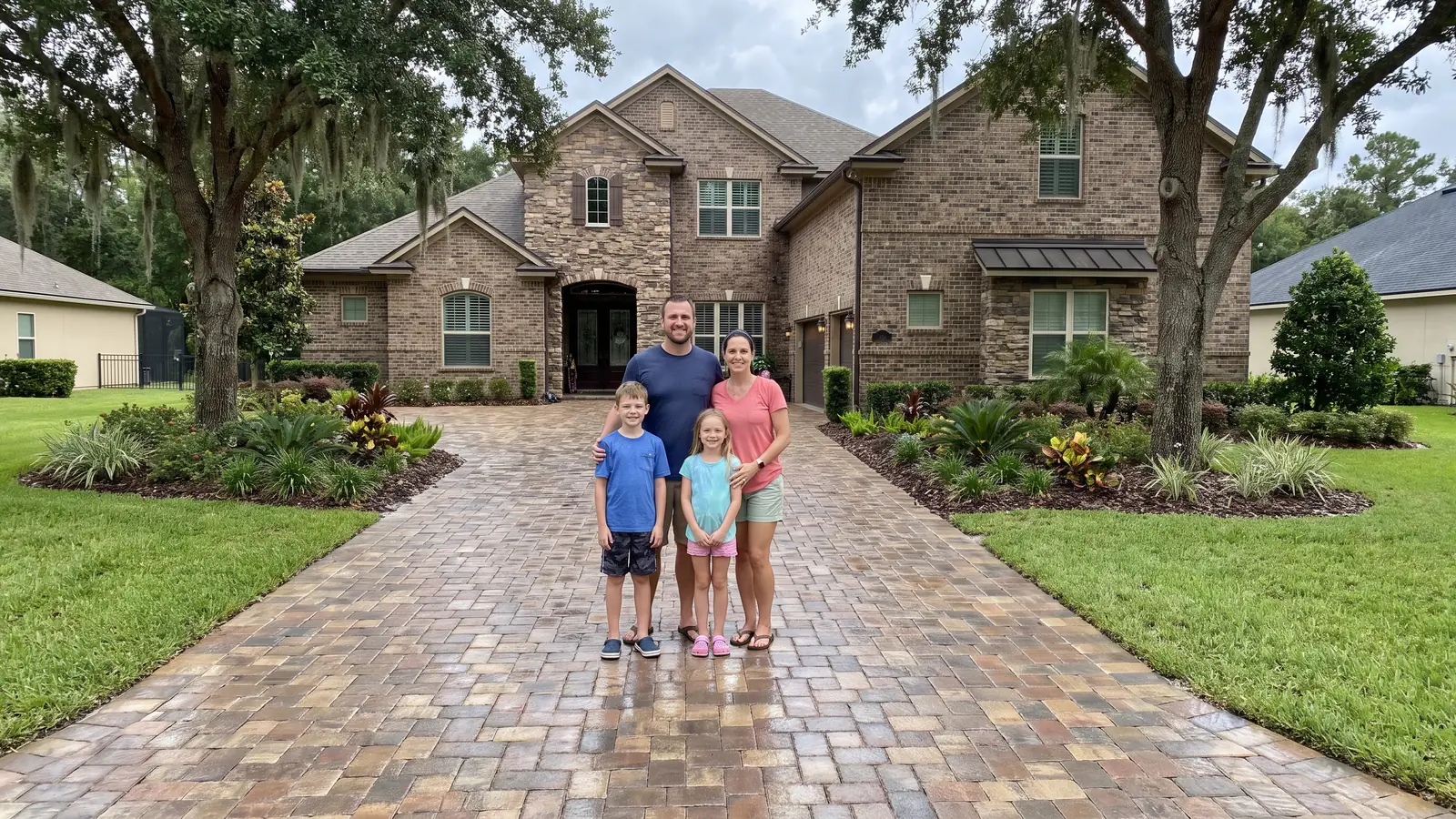
Paver sealing for Royal Terrace homes
Paver Sealing in Royal Terrace, FL
Royal Terrace got new streets and 214 new homes, and your pavers can get a free sealing estimate: call (904) 830-9782.
- Brings out deeper paver color
- Fresh joint sand helps lock pavers in place
- Gives weeds less room to grow
- Makes the surface easier to keep clean
- Free estimate, no obligation
Request a Free Estimate
Free, no obligation.
Fast, careful paver sealing in Royal Terrace
Paver sealing in Royal Terrace comes with a free estimate from a local contractor who cleans, re-sands and seals driveways, walkways and patios. A reply arrives inside 1 business day, and most come back much sooner than that. To start, ask for a free estimate and mention which surfaces you want looked at.
Maybe the walkway to your front door has gone pale and patchy, with weeds standing in the cracks between pavers. A wash, new sand and a fresh coat bring back a single even color. Prefer to talk first? Call (904) 830-9782 and say what you are seeing.
Why hire a local paver sealing contractor in Royal Terrace?
Royal Terrace homeowners often choose a local contractor because the neighborhood was rebuilt in stages, so pavers here can be brand new or decades old. To hear how that affects your yard, ask for a free estimate.
Free estimate, your call
A contractor looks over your Royal Terrace pavers and quotes at no charge. Saying yes is up to you.
A range you can check
Prices published by Northeast Florida companies run $1.75 to $3.25 per square foot to clean, sand and seal. Use that span to test any Royal Terrace bid.
New pavers get a fair wait
Newer installs need weeks before a first coat. A contractor can tell you when yours is ready.
Matte or wet look
A wet look makes color richer, but wear in the drive lane shows sooner. Matte keeps the natural look. You decide.
Get Your Free Estimate in Royal Terrace
Tell us about your pavers in Royal Terrace.
Free, no obligation
What paver problems show up most in Royal Terrace?
Pavers too new to seal right away
In Royal Terrace, Habijax built 214 new homes and the city rehabilitated 72 existing ones, so some pavers here went in recently. A Jacksonville paver company advises waiting 30 to 60 days after installation, and Unilock says 2 to 3 months, or up to a year. White mineral haze called efflorescence can rise during that time. Sealer laid over it would trap the haze, which means patience beats an early coat. Ask whoever installed them for the date, since the wait starts there. Pavers past the waiting period are ready for a first coat. Your installer or builder may still have the paperwork.
Washouts after a hard summer storm
Washouts and sinking rank first among the reasons pavers fail, one Jacksonville sealing company says. Jacksonville picks up about 52 inches of rain in a year, and the heaviest months are May through September. The city built a master storm water facility and drainage improvements here, yet a low corner of a drive can still lose sand in a heavy downpour. Sunken spots are reset before sealing, since a coat would keep the dip. Walk the drive after the next storm and note where water sits or sand piles up. Tell the contractor what you find, because that is where the repair starts. Pictures of the low spots help at the estimate.
Sandy ground and thin joints
The USDA describes the Ortega soil series, first mapped in Duval County, as fine sand more than 80 inches deep with rapid permeability. Sandy ground drains fast, which is kind to a driveway base. Joints are another story, because rain and tires pull sand out of them. Weeds then root in the soil that settles in, so topping up joints is part of any good job. A landscape trade article says sealing the joint sand is the most effective way to stop weeds. Fresh sand with sealer over it lasts longer than sand alone.
Oil, tire marks and rust from sprinklers
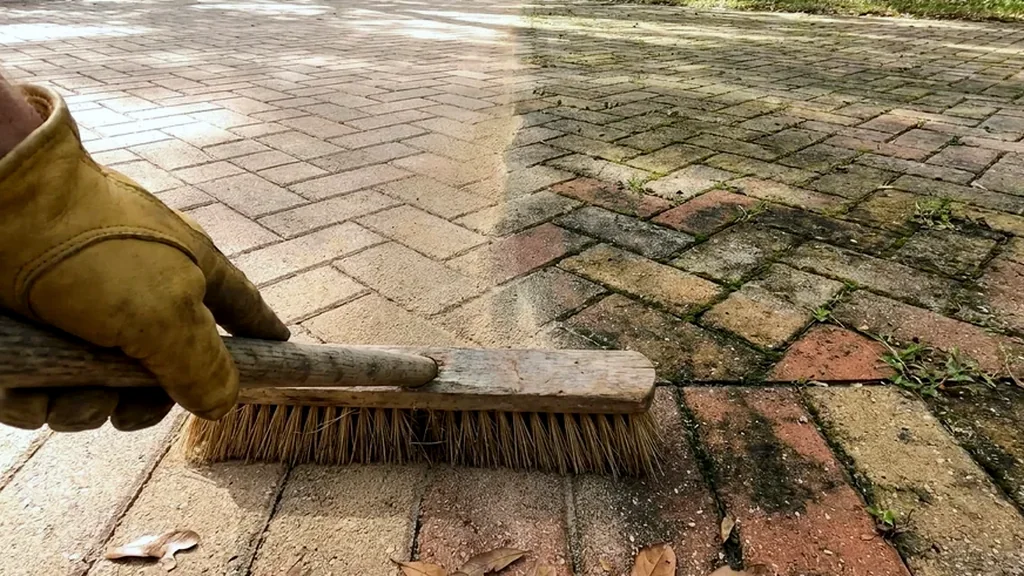
A Jacksonville paver company says driveways collect oil drips, tire marks and rust from irrigation water. Sealing locks in whatever is on the surface, so these marks get treated first. Deep stains can stay faintly visible even after treatment. Point out your worst spots at the estimate so nothing is a surprise. Turning sprinkler heads away from the pavers keeps new rust marks from forming. Existing marks still need treating before the coat goes on.
An old oil-based coat on a renovated home
Royal Terrace had 72 homes rehabilitated through a repair program, and homes that change hands can carry unknown sealer. One Jacksonville company says pavers sealed with an oil-based product must be stripped first, about 10 to 20 percent of its jobs. Stripping takes extra time, and a trade guide warns that pressure above 3,000 PSI can strip the paver surface itself. The contractor has to identify the old coat before choosing a method. Keep any receipt from a past sealing job. It can save the contractor a test and save you time.
What did the Royal Terrace rebuild change for paver owners?
It left the neighborhood with rebuilt streets, new drainage and a large block of newer homes, so the age of your pavers is worth knowing. A HUD newsletter says Royal Terrace received over $20 million in federal block grant funds over seven years. That paid for sewer lines, a storm water facility, curbs, gutters, sidewalks and resurfaced streets. When you ask for a free estimate, tell the contractor roughly when your pavers went in.
Listings close to Royal Terrace Addition include streets such as Tuskegee Road, Meharry Avenue and Morehouse Road, plus West 44th and West 45th Streets and Talladega Road. Listings run from about 1,000 to 1,747 square feet, with 3 to 4 bedrooms. Homes of that size often have compact driveways and walks, which keeps many jobs small. Call (904) 830-9782 and give your street so the contractor can plan the visit.
ZIP 32209 is mostly single-family, at about 75 percent of housing units, and renters live in 53 percent of occupied homes. If you own a rental here, the owner can request the quote and set the finish. One listing site shows no HOA on record for the Royal Terrace Addition, though your own deed may say otherwise. Check first, then ask for a free estimate.
What does paver sealing cost in Royal Terrace?
Expect the wash, new sand and sealer coat to run $1.75 to $3.25 per square foot, the range Northeast Florida companies commonly publish. Safe Touch quotes only after inspecting the joints, and that is a fair habit to expect. Small, compact Royal Terrace lots can land higher per foot. To get a measured number, ask for a free estimate.
A failed old coat adds cost, since it has to be stripped before anything new goes down. Sand that has washed out also has to be restored first. Pavers installed this year may need to wait before the first seal, which changes the schedule more than the price. Call (904) 830-9782 and ask what applies to you.
| Paved area | Typical example | Clean, sand and seal |
|---|---|---|
| 300 sq ft | Small patio or walkway | $525 to $975 |
| 600 sq ft | Two car driveway | $1,050 to $1,950 |
| 1,000 sq ft | Large driveway or pool deck | $1,750 to $3,250 |
| 1,500 sq ft | Driveway plus pool deck | $2,625 to $4,875 |
Math based on the $1.75 to $3.25 per square foot that Northeast Florida paver companies published as of November 2026. Your contractor sets the actual price after seeing the surface. Repairs, leveling and stripping failed sealer are usually extra.
How does a paver sealing job work in Royal Terrace?
Date the pavers and test the old surface
The contractor asks when your Royal Terrace pavers were installed and looks for an older coat. New pavers wait their weeks. Old oil-based sealer has to be stripped, and water-based sealer cannot go over solvent-based sealer. Bring up any spot that stays wet or any sunken patch. Those details change the plan and the quote. The wait for new pavers is counted from the install date.
Clean with care for the surface
Washing removes dirt, algae, oil marks and sprinkler rust. A trade guide warns that going above 3,000 PSI on standard concrete pavers risks stripping the surface, so pressure is kept in check. One company in Jacksonville budgets 2 to 3 hours of prep for each hour of sealing. Oil spots and rust marks get their own treatment first, and deep stains may not come out completely. Rinse water is kept off plants and siding wherever it can be.
Reset low spots and refill joints
Sunken or lifted pavers are fixed before sealing, because sealing keeps the surface as it is. Then fresh sand goes into the joints, which matters on a sandy-soil street where rain pulls sand out. Full joints help keep weeds from rooting. Summer storms in Jacksonville pull sand from pool decks and driveways, so the joints get checked once more after the sweep. Poor drainage can wash away bedding sand as well, so the contractor looks at where water runs.
Wait for a stretch of dry weather
Sealer should never go on a damp surface or right before a forecast downpour. Polymeric sand also needs a long dry spell to set. Spring and fall often give the steadiest weather, so the date may move with the forecast. If a storm is in the forecast, the contractor moves the date instead of racing the weather. A damp surface is behind most calls about cloudy sealer.
Seal in the finish you picked
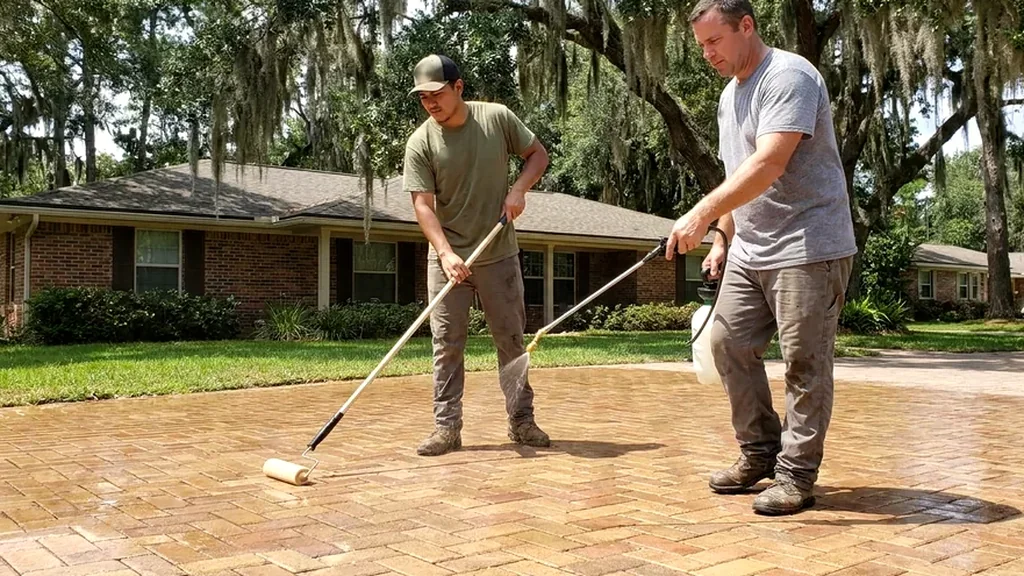
A wet look deepens color, and matte keeps the natural look. The sealer is sprayed and worked into the joints. A Jacksonville sealing company says to allow 2 to 4 hours before foot traffic and 24 hours before cars. Ask the contractor for the product name and finish so the next coat can match what went down. Water that beads on the finished surface is a sign the coat is working.
Complete paver services in Royal Terrace
A Royal Terrace job moves through four stages: clean, re-sand, dry and seal. Cleaning removes dirt and stains so none are locked under the coat, and new joint sand goes in next. Sealer goes on once the surface is dry, usually sprayed and worked into the joints. Call (904) 830-9782 for a rough idea of how long each stage runs.
Driveways collect oil, tire marks and irrigation rust, while front walks mostly see foot traffic and shade. A back patio gets sun, furniture and spilled drinks. Each surface wears differently, and a drive usually wears faster than a patio, so the quote should list them one by one. When you ask for a free estimate, mention each paved area you want sealed.
Film-forming acrylic sealers sit on top and stabilize joint sand, while penetrating silane or siloxane products soak in and leave the look unchanged. A wet look deepens color but shows wear in the drive lane, and matte keeps things natural. The finish matters most on a driveway that takes daily tires. Call (904) 830-9782 and sort out the finish that suits your house.
In Royal Terrace, timing depends on the age of the pavers and on the weather. Newer pavers wait 30 to 60 days or longer for haze to work out, and older ones wait for a dry stretch. Spring and fall often bring the steadiest dry weather. For a date that fits both, ask for a free estimate.
Questions to ask before you hire
- Can you match the new joint sand to the color that is there now?
- Do you work on Saturdays, so I can be home for it?
- Can you clean and seal around my fountain and fire pit without harming them?
- Will you seal the strip of driveway between the sidewalk and the street?
- What do you spray on the mildew, and is it safe for my lawn and my dog?
- Can you level the pavers that sank near my downspout before you seal?
- Will you come out and measure, or do you price the job from photos?
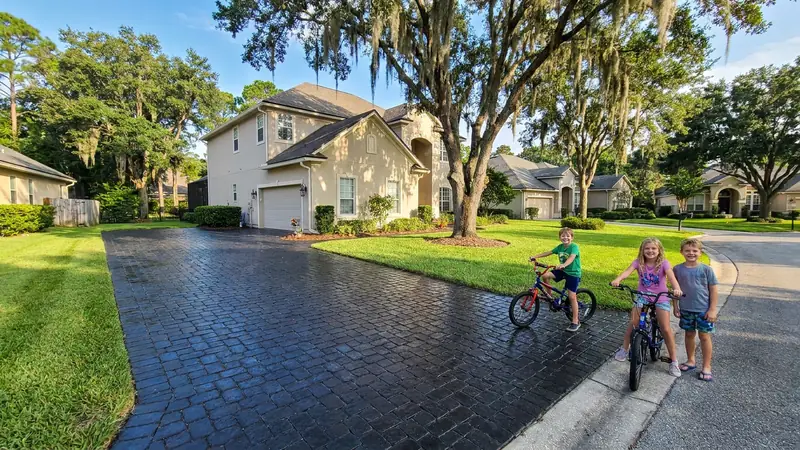
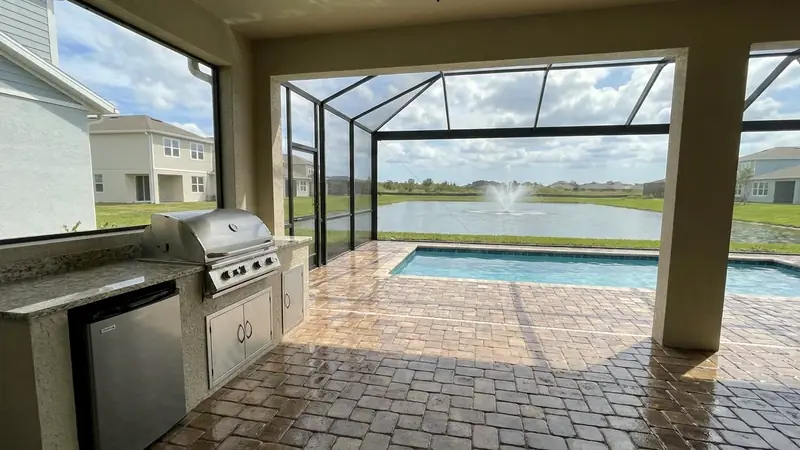
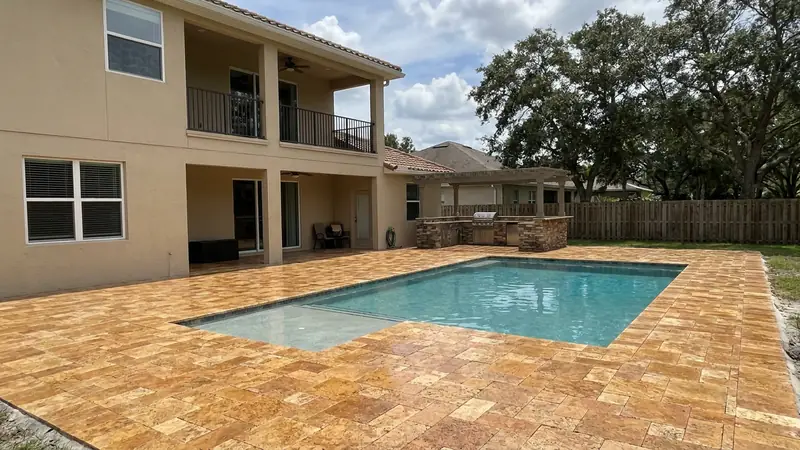
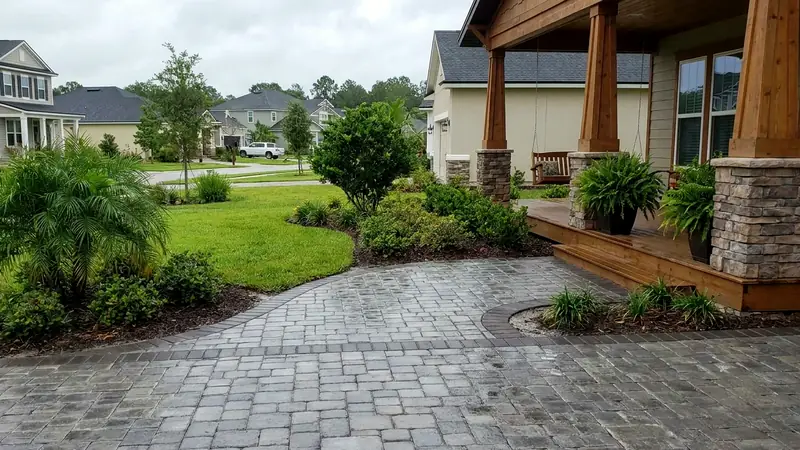
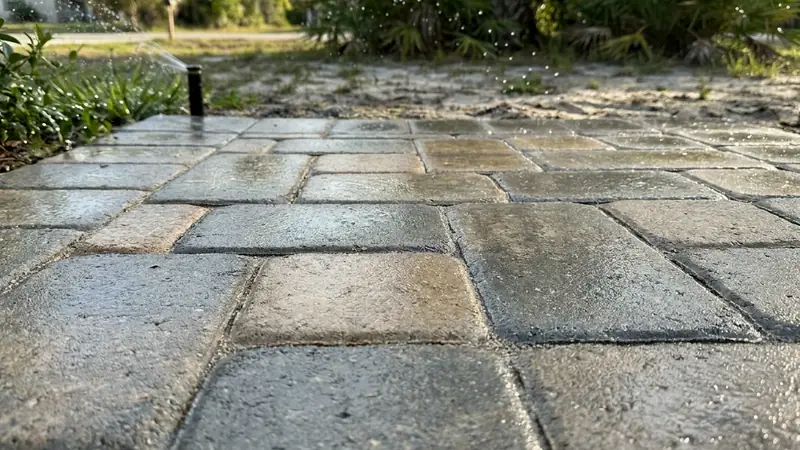
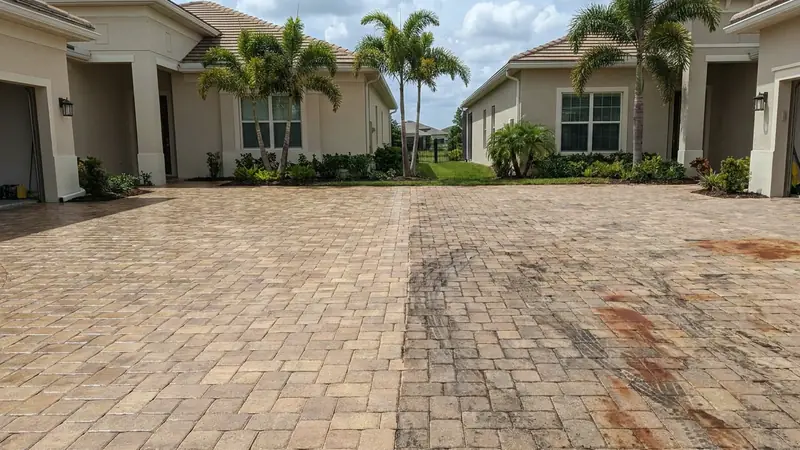
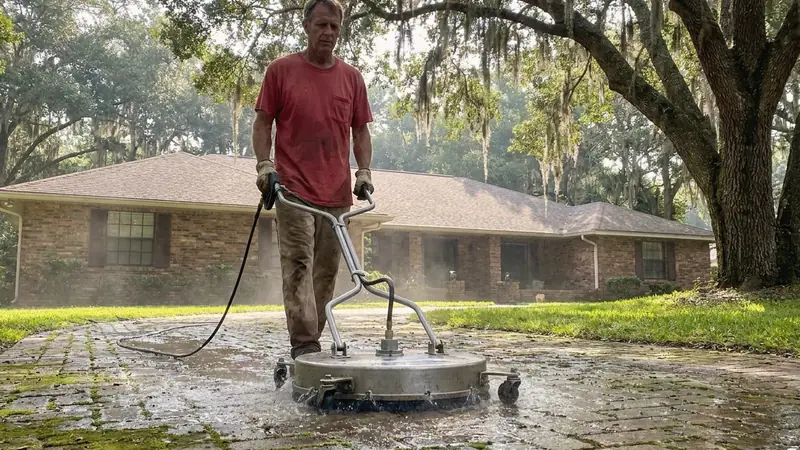
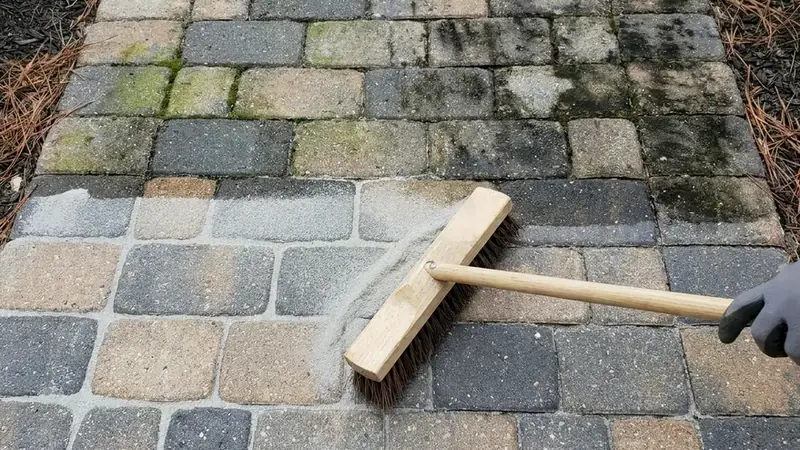
What do sealed pavers look like around Royal Terrace?
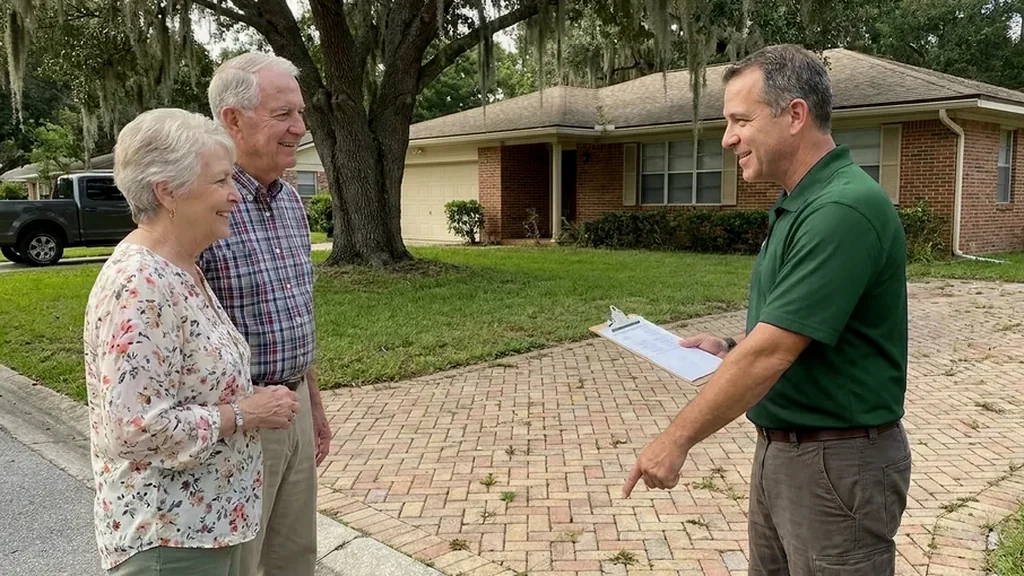
Why local matters in Royal Terrace
A contractor who knows Royal Terrace knows the area was rebuilt over several years, so no two blocks are quite the same age. That helps with questions about new pavers and old coats. Someone from across town may assume every yard was built at once. To reach a contractor who works Royal Terrace and nearby streets, call (904) 830-9782.
Timing is where local experience pays off. Jacksonville's rain peaks from May to September, and its driest stretch runs November through April. A contractor who plans around that does not seal damp pavers. You can ask for a free estimate and ask how the schedule would work for your yard.
Sandy ground adds another local detail. Rain and tires pull sand out of joints, and open joints let weeds root. A local contractor expects that and brings extra sand. If you want to know what to expect on your street, ask for a free estimate and ask for a joint check at the estimate.
Is Royal Terrace tied to the older story of Moncrief Road?
Royal Terrace is one of the Northside neighborhoods, a region that also holds Moncrief Park. Moncrief Road began as a toll road built by the developer of Moncrief Park, and it was the city's third paved road. Before I-95 opened in 1960 it was the main route between Northwest Jacksonville neighborhoods and downtown. If you live in the wider area, ask for a free estimate and mention your cross streets.
Moncrief Park had a racetrack that opened in 1909 and held its last race in 1911, before the land became a subdivision in 1914. The Point, where Myrtle Avenue, Moncrief Road and West 25th and 26th Streets meet, once saw streetcars, and Holley's Bar B Q opened nearby in 1937. Closer to home, Northwestern Middle School and Legends Elementary sit on West 45th Street. Call (904) 830-9782 for a visit near any of them.
Frequently Asked Questions
Why is paver sealing so expensive in Royal Terrace?
Most of the price is prep work, not the sealer itself. A Jacksonville company reports 2 to 3 hours of prep for each hour of sealing. Stripping an old coat and refilling sand add more time, which is why a Royal Terrace quote can sit above the usual range. Ask for the measured square footage in writing so you can compare bids.
What is a good water-based paver sealer for Royal Terrace?
Sealers come in water-based and solvent-based types, and the old coat decides which one can go on. A water-based product cannot follow a solvent-based or oil-based coat. Ask the contractor which product is going on and write the name down for later. Sealers also come in solvent-based types, and a water-based one cannot follow them.
How long does paver sealing last in Royal Terrace?
Quotes from companies in the area commonly run two to five years between coats. Driveways wear faster than patios. One Jacksonville company says to sprinkle water on the pavers: if it stops beading and soaks in fast, it is time for a fresh coat. Sun, rain and traffic all wear sealer down, which is why drive surfaces go first.
How do contractors clean patio pavers before sealing in Royal Terrace?
They wash off dirt, algae, oil and rust, then replace joint sand. A trade guide warns that pressure above 3,000 PSI on standard concrete pavers can strip the surface, so a careful contractor keeps it lower. Sealer goes on only after everything dries. Ask what pressure the contractor plans to use.
How soon can I seal new pavers on a Royal Terrace home?
Wait at least 30 to 60 days after installation. Unilock says 2 to 3 months, and sometimes up to a year, because white efflorescence haze can rise during that time. Your installer should know the exact date. A coat applied too early can seal that haze in.
Can you seal over an old oil-based coat in Royal Terrace?
No, pavers sealed with an oil-based product must be stripped first. One Jacksonville company says that applies to about 10 to 20 percent of its projects. Strip time is added to the quote, so ask about it. The contractor needs to identify the old product first, and your records can help.
Does Royal Terrace need an HOA approval to seal pavers?
It depends on your deed. One listing site shows no HOA on record for the Royal Terrace Addition. Florida law lets an association review changes only to the extent its own rules say so, so check your paperwork if you have one. A copy of the association rules makes the answer quick.
How long do I stay off my Royal Terrace driveway after sealing?
Plan on 2 to 4 hours before foot traffic and 24 hours before cars, the times one Jacksonville company gives. Weather can shift those times slightly. Park on the street overnight to be safe. Cars can go back on once the full day has passed.
Ready for a Free Estimate in Royal Terrace?
Call (904) 830-9782 and tell us about your pavers.
Free, no obligation